
Magnify Matters Podcast

“Building better teaching through practice and feedback” with Teach Well

Drawing on their work across more than 900 schools, Katie Webster and Katie Roberts-Hull reflect on the realities of school improvement, from early career teaching experiences to system-wide professional learning, and what it takes to move beyond one-off professional development to something that genuinely shifts teaching.

As partners in the Magnify Sandhurst journey, they connect research to practice, exploring how modelling, feedback and sustained support build teacher confidence and create the conditions for every student to learn.

Together they explore:

  • Why calm, orderly and predictable learning environments are the foundation for effective teaching and learning.
  • What doesn’t work in professional learning, and why one-off workshops rarely lead to sustained change in practice.
  • Why teachers need to see what effective instruction looks like, not just hear the theory behind it.
  • How retrieval practice, review and full participation strengthen learning and support long-term memory.
  • Why system improvement relies on coherence, shared language and continuous learning over time.


Whether you’re in the classroom, leading a school or working across a system, this episode offers practical insight and a clear reminder that improving teaching is not about doing more, but about doing what works, consistently and well.

Now stay with us as we magnify what truly matters in education.

Flourising Podcast

“What schools really like to have is… clarity” with Katie Roberts-Hull – Flourishing Podcast

In this episode of the Flourishing Podcast, Danny Jaber speaks with Katie Roberts-Hull about how teachers, schools, and systems can improve teaching practice through evidence-informed professional learning, strong curriculum resources, and clear system direction.The conversation explores how success builds motivation, why teachers need clarity and shared language, and how professional learning works best when it combines the “why” of research with practical classroom strategies. Katie also discusses the importance of intellectual preparation, the role of high-quality curriculum resources like Ochre, and how system frameworks such as the Vision for Instruction and Vision for Engagement help schools align practice and strengthen equity and excellence across the system.This episode is ideal for teachers, school leaders, and education system leaders interested in improving teaching practice, professional learning, and student outcomes.


2025 Impact Report – Jolimont Primary School

Leading the way in high achievement

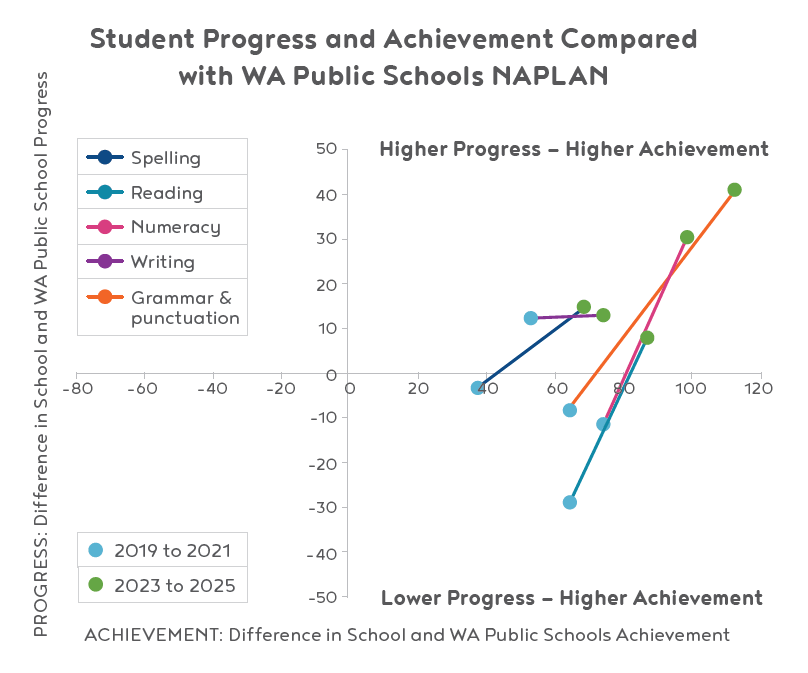
According to the recent coverage in The West Australian, Jolimont Primary is one of only two WA primary schools named among the 30 ‘high achievement’ schools in this year’s statewide NAPLAN round. What stands out: 69% of their Year 5 students made above-average progress in numeracy – the highest among all schools on the list – when compared with students of similar backgrounds and the same starting scores from Year 3. Their reading growth was also outstanding, with 62% of Year 5s achieving above-average progress.

As the West Australian puts it, these results reflect more than just test scores. The principal of Jolimont, Barbara Iffla, told The West Australian that staff were ‘delighted and proud’ that their efforts were translating into real, significant outcomes for students. For a relatively small school with a culturally diverse population, with about 410 students from Kindergarten to Year 6, this kind of high-impact, high-growth result is especially impressive.

Over the past ten years the school has created strong collaborative team processes based on trust and practice. Year level teams meet weekly to discuss and action everything from operational plans, lesson and unit planning, assessment, pedagogy and concerns. They are consistent in their delivery of whole school programs such as Prime Maths, Morphology, Letters and Sounds, Ochre Novel Studies, Talk for Writing and Seven Steps.

Their priority has been embedding classroom practices, including to challenge their most able students, with Barbara noting, ‘the biggest impact has been having our whole school staff trained by Teach Well, ensuring common practice and language throughout the school, supporting student learning and teacher impact.’

Twenty teachers from Jolimont have completed the Masterclass Series in High-Impact Instruction, with more teachers to follow in 2026. Their willingness to build capacity, implement evidence-based instructional strategies, and commit to continuous improvement

2025 Impact Report – Catholic Regional College, St Albans

St Albans is a Y7-10 school in the Catholic Archdiocese of Melbourne that has made a strong start towards providing the best opportunities for students through high quality and consistent teaching and learning.

After a review in 2024, the leadership team set a clear plan to improve literacy and numeracy, as well as provide a more effective model of coaching to enhance teacher capacity. Staff completed the Masterclass Series in 2025, along with leadership completing the Instructional Lead Fellowship. A whole-school workshop aligning to the Masterclass Series also ensured the staff had a shared and consistent understanding to high quality teaching and learning. The Curriculum Survey conducted as part of the Instructional Lead Fellowship, with a focus on Mathematics, provided valuable information from the department on curriculum. This highlighted the need
for a focus on developing fine grained unit outlines to ensure a guaranteed and viable curriculum.

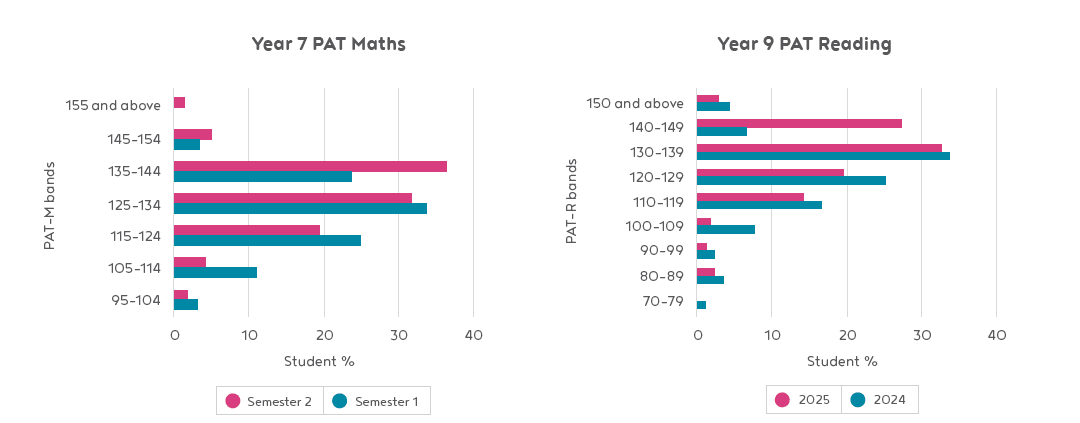
Implementation of the Full Participation Principles began in the Mathematics faculty, with the Mathematics Leader facilitating professional learning and modelling explicit teaching practices and use of the Ochre slides as a base resources. Their efforts paid off. For Maths, there was a clear upward shift in achievement for Year 7 students, with the proportion of students in the highest band increasing from 24% to 37% and a reduction in the mid and lower bands. In Reading, Year 9 students at the 140 – 149 achievement band went from 6.6% in 2024 to 27% in 2025.

CRC St Albans is on an exciting journey to support all their students to achieve improved outcomes, armed with a clear plan, whole-school collaboration and evidence-based professional learning in hand.

Masterclass Series Graduate, James Pengelley, on the impact of using different mediums on student outcomes in assessments

Masterclass Series graduate, teacher and adjunct lecturer at Murdoch University, James Pengelley, recently spoke to ABC National Radio on the impact two different mediums, used by students, may have on their results when completing assessments. 

Reflecting on the most recent NAPLAN results showing generally stable trends in student cognition of age-appropriate content and with 4.4 million tests submitted online, researchers are questioning approaches to test completion as being a possible factor impacting NAPLAN results. In the discussion on whether the ‘pen’ is mightier than the ‘keyboard’, James highlighted whilst students are living in a digital world, where the general trend is towards the digitisation of education, the evidence shows that both computers and handwriting have a place, and in particular, the skills and processes for both should be explicitly taught using high-impact teaching strategies. 

In a study conducted by James, involving Year 9 Science students who were fluent in using computers within their classes every day, as questions became more complex, the demand on cognitive load increased, where those using pen and paper performed better in those instances. James discussed how working memory can only hold a limited amount of information in it at any one time, and “more difficult questions tend to place a student under high cognitive load, and that’s one of the reasons why we think using a paper-based test gives them a slight advantage.” 1 

James points out the increased extraneous load when using a computer (external distractions) along with the increasing difficulty of questions, sees the effort by students decrease along with their use of scribble/scratch paper. “Ultimately, when dealing with younger learners, moving learning and assessment tasks from paper to computer is associated with a cost that is likely to produce lower test scores, particularly as the intrinsic load of content increases and student working memory capacity decreases.”2 This is an important contribution to cognitive science research and cognitive science principles that inform high-quality instruction. 

Other observations from his research noted that as we become adults, we tend to have better working memory capacity and linking this with our increased fluency using computers, our ability to complete more complex tasks using a computer improves.  

James’ advice points to the need for us to develop fluency with both mediums, handwriting and computers, to reduce any possible impact using one over the other may have on student performance. 

You can listen to the ABC interview here. 

You can access the main study here. 

You can access the literature review here. 


References: 
  1. Pengelley, J. (2024, August 23). When it come to NAPLAN is the pen mightier than the keyboard: Expert [Radio broadcast]. ABC. https://www.abc.net.au/listen/programs/radionational-drive/when-it-comes-to-naplan-is-the-pen-mightier-than-the-keyboard/104264062
  2. Pengelley, J. (2022). A testing load: comparing cognitive load in computer and paper-based testing [Master’s Thesis, Murdoch University]. Research Portal. https://researchportal.murdoch.edu.au/esploro/outputs/graduate/A-testing-load-comparing-cognitive-load/991005566468407891 


Teach Well article published in LDA Bulletin

Ingrid Sealey, CEO & Founder of Teach Well, was published in Learning Difficulties Australia’s April Bulletin. Her article, Crafting sentences: Four simple writing techniques to elevate your students’ learning, explores how sentence-level writing activities can be used to support students to better comprehend, think about, and express relationships between key concepts.

Read the article here.

Apply for Advanced Standing at Edith Cowan University

We are delighted to announce that the Teach Well Masterclass Series is now recognised by Edith Cowan University (ECU)! Participants that complete the Masterclass Series program are eligible to apply for advanced standing (credit) for a unit in the Master of Education at ECU once they complete an essay task and all course deliverables.

Interested alumni will need to complete one 4000-word essay on ‘Navigating the academic and research evidence base to adaptively identify high-impact instructional practices’. Full details of this essay, including scaffolding into 5 sections with specific word counts and essay excerpts, are available to guide your thinking. Alumni of the Admin stream of the course are also invited to express interest to the Teach Well team and we can discuss further details with you regarding your eligibility to apply.

We are really thrilled to see the work of the incredible educators in our Teach Well community recognised at the post-graduate level, honouring the commitment and professionalism of Masterclass alumni. If you are interested in applying, please get in touch with us at [email protected].

Friday 20th October 2023 is International Developmental Language Disorder Awareness Day

What is Developmental Language Disorder?

Developmental Language Disorder, or DLD, is an invisible and lifelong neurodevelopmental condition that affects the development of spoken and written language, and social and academic development. People with DLD experience language difficulties in the absence of any known biomedical condition and is estimated to affect approximately 1 in 14 people (7%) – that’s 2 students in every class!

People with DLD have difficulties with language and not with intelligence. While their primary area of difficulty is understanding and/or using language, people with DLD might have co-occurring conditions, such as learning difficulties, ADHD, dyslexia, maths disabilities or mental health issues.

What causes DLD?

DLD has a genetic and biological basis, but there is no known single cause of DLD. DLD is not caused by how parents interact with their children, or by speaking more than 1 language. DLD can affect people from all walks of life, regardless of nationality, culture, or language.

How can you recognise DLD?

People with DLD have difficulty talking and/or understanding language.

Children with DLD might:

  • find it hard to follow instructions, answer questions or understand words and concepts
  • have difficult paying attention
  • struggle to remember what they have been told, or what they’ve read
  • have difficulties learning to read and write
  • struggle to find the right words to express their thoughts and ideas
  • have difficulty organising words and phrases correctly in a spoken sentence
  • have trouble engaging in conversation, recounting events, or telling stories

People with DLD do not look any different from their peers. It is an invisible disability and can be hard to recognise.

What supports are available to people with DLD?

When provided with high quality supports and accommodations, individuals with DLD can achieve social, academic, and professional success. A diagnosis is made by a speech pathologist, however a person with DLD may need support from others, including educators, occupational therapists, psychologists, families, friends, and employers.

How can you support students with DLD in a primary and secondary school setting?

Participants and alumni of the Masterclass Series will be pleased know that so many of the high impact teaching strategies and evidence-based teaching approaches that we discuss in the course are part of the best-practice toolkit for supporting students with DLD in both primary and secondary school settings. Current guidance for best practice includes:

1. Pre-teach key vocabulary.

  • Pre-load students with key vocabulary prior to a lesson, topic, or theme.
  • When pre-teaching vocabulary, make sure that you discuss the pronunciation of words, talk about the syllables, and sounds in words and ask students to practice saying the words.
  • Discuss the meaning of words by providing simple definitions and synonyms, provide and discuss examples and non-examples of the word or concept, and use the word in sentences.

2. Explicitly and systematically teach vocabulary.

  • Support the development of vocabulary breadth and depth, by systematically and explicitly teaching Tier 2 vocabulary and vocabulary needed for instruction, such as ‘compare’ or ‘analyse’.
  • Like when pre-teaching topic vocabulary, when teaching Tier 2 and instructional vocabulary, include multiple opportunities for students to hear and say the word, talk about the sound properties of the word (syllables, phonemes), provide examples and non-examples of the word, and use the word in the context of sentences.

3. Provide systematic and explicit grammar instruction to support comprehension and expression.

  • Teach students how to construct and expand simple sentences, with a focus on the meaning of each part of the sentence (e.g., the subject of the sentence tells us who or what the sentence is about; the verb in the sentence tells us what the who or what is doing; the adverb tells us how something was done).
  • Explicitly teach sentence combining using coordinating and subordinating conjunctions, again with a focus on the meaning or the “jobs” that the conjunctions are doing in the sentence. For example, “because links the reason”.
  • Use a visual system, such as colour or shape coding to support students’ understanding of sentence constituents and make spoken sentences visual.

4. Support working memory.

  • Reduce cognitive load by keeping instructions and spoken sentences simple.
  • Activate prior knowledge and make links to long term memory.
  • Support retrieval through regular (weekly, fortnightly, monthly) reviews.
  • Teach content in chunks, interspersed with regular retrieval practice and checks for understanding.

5. Support processing of information.

  • Model how to complete tasks, and gradually release responsibility to students by using an I Do, We Do, You Do model of instruction.
  • Allow plenty of time for students to respond. Using pair-shares with elaborative questioning and non-volunteers also allows students the opportunity to practice answering the questions in a supported way.
  • Break tasks into smaller steps.
  • Use visual and written supports whenever possible.
  • Use graphic organisers to help students organise new information and make links with prior learning.

For further information on DLD, see the following recommended links:

Research from an Alumnus and Boosting Participation Rates

We’re excited to share some alumni news –  James Pengelley from All Saints’ College, has recently published new research into how the use of computers for assessments impacts on students’ cognitive load. His research concluded that paper and computer assessments affect learners differently, with computer assessments adding additional cognitive load for more demanding tasks, leading to lower scores for more difficult items. James Pengelley’s work underscores the importance of designing assessment practices to ensure teachers, educators, and policy makers are fairly and equitably testing content rather than creating assessments that place learners under an unnecessary testing load. His research questions previous findings that computer-based assessments can be conducted without negative consequences on test outcome and calls for further research into the impact of different testing modes on students. A huge congratulations to James for such outstanding research on a very important topic!

Read James’ article here: A Testing Load: Investigating Test Mode Effects on Test Score, Cognitive Load and Scratch Paper Use with Secondary School Students

School Plus’ Partnership Opportunities
Applications for School Plus’ Partnership Opportunities will be open on Monday, 7th August! Partnerships are designed to provide schools with the resources and support they need to create sustainable change within their communities through funding, coaching, and program management support. Don’t miss this incredible opportunity, we strongly encourage schools to apply. Learn more by clicking on this link.

Three resources for our alumni

Boosting the participation ratio during our explanations


How can we make sure our students are listening, thinking and understanding? In this article, Craig Barton shares some easy-to-use strategies to ensure students aren’t opting out of the thinking when the teacher is explaining.

Are SEND children different?


Monique Nowers explains that students with special educational needs learn the same way as their peers but face greater barriers to education and are more vulnerable to ‘imperfect teaching’. By breaking down content into attainable steps and providing enough practice, teachers can effectively accommodate the differences of these learners.

Five Ways to use Worked Examples – Think Forward Educators


This blog post by maths guru, Alex Blanksby, shares how using worked examples can be more effective in enhancing understanding than getting students to attempt unfamiliar problems independently. The author gives some strategies for how to use these effectively in the mathematics classroom.

Expanding learning with a Fogarty Foundation scholarship

We recently chatted with Salome about her scholarship award and the work she’s been undertaking with the Midwest Network. The Midwest Network have seen outstanding increases in student outcomes over the past few years as they’ve worked together as a multi-school community to build a consistent approach to high-impact instruction. We asked Salome what this work has been like on the ground…

You have recently taken part in the Midwest Network’s Instructional Lead Series through Teach Well. What are some of your reflections on this Series in your personal context? 

This Series has allowed me to grow personally and professionally. It has connected me with like-minded, driven and enthusiastic leaders within the Midwest Network. The professional discussions, collaboration and coaching opportunities provided throughout the series have been invaluable and have developed my leadership capacity and skillset. In addition, it has been great to be able to bounce ideas off of, not only other schools and other leaders but with the passionate, knowledgeable and experienced Teach Well team too!

Congratulations on receiving a Fogarty Foundation Scholarship, can you tell us what you are excited about specialising in? 

Thank you. I am extremely passionate about Language and Literacy and believe that English not only underpins our personal futures but also is what is necessary to guide our paths and successes as a society. It is for this reason that I am excited to specialise in Learning Difficulties with a focus on supporting students with Dyslexia, Dysgraphia and Hyperlexia. I aim to further develop my skillset in identifying weaknesses in knowledge and abilities using evidence-based practices, to work towards bridging those gaps and creating successful and happy members of society.

Do you have other comments or reflections you would like to share with the Alumni network? 

I am grateful to share the space with like-minded individuals who strive to improve student outcomes. The dedication and passion displayed by fellow alumni in changing practices and participating in research-driven conversations is infectious. The invaluable experiences offered by Teach Well have sparked my passion for the Science of Reading and the Science of Learning, which has led me to meet some incredibly knowledgeable and experienced educators; for which I am thankful.

– Salome Ehlers, Primary School Teacher