Apply for Advanced Standing at Edith Cowan University

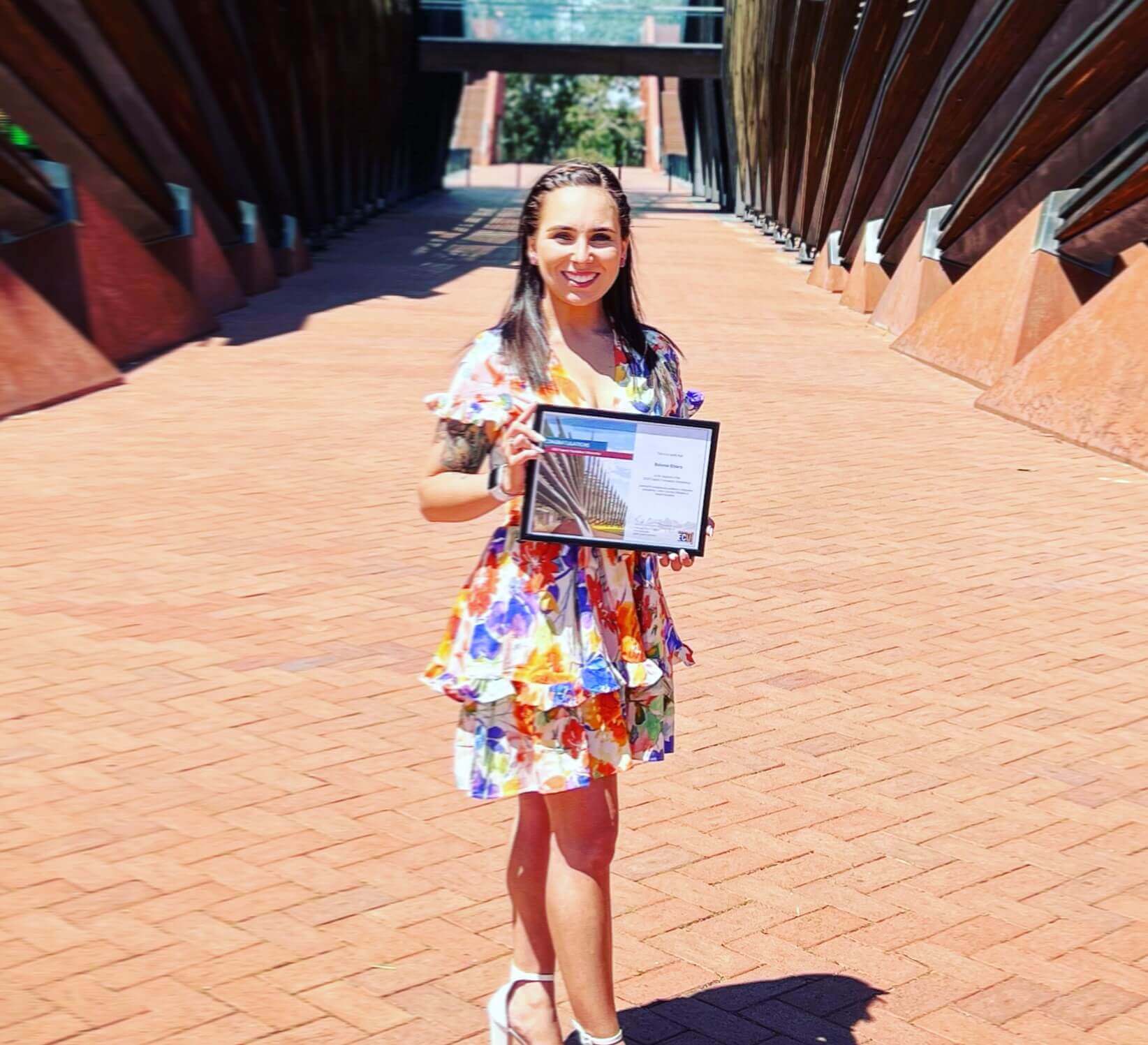
We are delighted to announce that the Teach Well Masterclass Series is now recognised by Edith Cowan University (ECU)! Participants that complete the Masterclass Series program are eligible to apply for advanced standing (credit) for a unit in the Master of Education at ECU once they complete an essay task and all course deliverables.

Interested alumni will need to complete one 4000-word essay on ‘Navigating the academic and research evidence base to adaptively identify high-impact instructional practices’. Full details of this essay, including scaffolding into 5 sections with specific word counts and essay excerpts, are available to guide your thinking. Alumni of the Admin stream of the course are also invited to express interest to the Teach Well team and we can discuss further details with you regarding your eligibility to apply.

We are really thrilled to see the work of the incredible educators in our Teach Well community recognised at the post-graduate level, honouring the commitment and professionalism of Masterclass alumni. If you are interested in applying, please get in touch with us at [email protected].

Mastering Maths Facts for Secondary Students

On the 16 August this year, I had the pleasure of attending the ‘Mastering Maths Facts Webinar’ run by Teach Well for their alumni.

As a secondary teacher, I’m sure I’m not alone in the observation that it is a rare student entering high school that has instant recall of their basic multiplication facts.

I’ve always been of the mind that instant recall of those basic facts is vitally important for advancement and actual enjoyment of Maths but have been guilty of the “there’s too much in the curriculum, I don’t have time to teach these in high school” mindset of a secondary teacher. I have tried in the past to get them to make flashcards and practise at home but have never had any success with this working.

That all changed the day after the webinar – as when I was introduced to the full participation techniques and how to use them effectively – I was motivated to immediately have a go.

I was excited to implement a Peer Assisted Learning Strategy (PALS) the next day. The strategy I used was heavily based on one provided as part of the webinar.

I decided to use flashcards, with the times-tables 2×2 to 9×9 on them, 36 in total. I just do these ones as then they can use the distributive law to work out the bigger ones – these are just the ones I want instant recall of. After explaining the new focus to the students and explaining the reasons for it, we took that lesson for them to make flashcards, ensuring they were all correct!

The next day, we began. I started by creating a worksheet with 40 questions (2×2 to 9×9) on it with the intention of giving them 60 seconds to complete it all. When I tried it though, it took me 68 seconds to physically write all the answers on it, so I decided to give them 90 seconds to do it. Every student did the quiz, self-marked (with me reading out the answers) and handed the sheet back to me. Later, I recorded the results in a simple spreadsheet to give me the baseline.

Students then carried out the PALS which involved the students working in pairs (I don’t do the ‘stronger with weaker student’ part of the strategy, I find this isn’t necessary in my small class context). For 3 minutes, one student shows the other a card, if the receiver gets it right, the card goes to the back of the pack, if they get it wrong, they get told the correct answer and the card goes 3-4 spaces back from the front, so they get it again soon. At the end of 3 minutes, the students swap roles. We then do the 90 second quiz only once a week, on a Friday generally, after doing their PALS that day. We do our PALS at the start of every Maths lesson and/or it is part of the Daily Review on the days we do those.

I’m actually surprised, the students are really enjoying it and they will remind me if it seems like I’ve forgotten! Tracking their scores is showing that they are markedly improving with each class having an at-least 10-mark improvement over 4 weeks and individual students going from well under 20 correct to the high 30s. I even had one girl remark after the last 90 second quiz, “Oh, there were lots of the easy ones in this set this time.” What a pleasure it was to explain to her that the questions weren’t getting easier, it was that she just knew more of them. It takes 7 minutes at the start of each Maths lesson, and wow, is it time well spent!

Challenges? In all honesty, nothing really. Creating the quizzes could be an issue, but I would absolutely recommend the website: https://www.math-aids.com/ as it allows you to create almost any worksheet you could want. It has made it so easy to create the quizzes.

So, to finish up, I’d absolutely recommend secondary teachers take the time to get more of their students instantly recalling their basic multiplication facts, it is time well spent in my classes. Thanks to the Teach Well team for again changing my teaching and therefore my students’ learning for the better.

– Chris Buckland, Secondary Maths Teacher

Expanding learning with a Fogarty Foundation scholarship

We recently chatted with Salome about her scholarship award and the work she’s been undertaking with the Midwest Network. The Midwest Network have seen outstanding increases in student outcomes over the past few years as they’ve worked together as a multi-school community to build a consistent approach to high-impact instruction. We asked Salome what this work has been like on the ground…

You have recently taken part in the Midwest Network’s Instructional Lead Series through Teach Well. What are some of your reflections on this Series in your personal context? 

This Series has allowed me to grow personally and professionally. It has connected me with like-minded, driven and enthusiastic leaders within the Midwest Network. The professional discussions, collaboration and coaching opportunities provided throughout the series have been invaluable and have developed my leadership capacity and skillset. In addition, it has been great to be able to bounce ideas off of, not only other schools and other leaders but with the passionate, knowledgeable and experienced Teach Well team too!

Congratulations on receiving a Fogarty Foundation Scholarship, can you tell us what you are excited about specialising in? 

Thank you. I am extremely passionate about Language and Literacy and believe that English not only underpins our personal futures but also is what is necessary to guide our paths and successes as a society. It is for this reason that I am excited to specialise in Learning Difficulties with a focus on supporting students with Dyslexia, Dysgraphia and Hyperlexia. I aim to further develop my skillset in identifying weaknesses in knowledge and abilities using evidence-based practices, to work towards bridging those gaps and creating successful and happy members of society.

Do you have other comments or reflections you would like to share with the Alumni network? 

I am grateful to share the space with like-minded individuals who strive to improve student outcomes. The dedication and passion displayed by fellow alumni in changing practices and participating in research-driven conversations is infectious. The invaluable experiences offered by Teach Well have sparked my passion for the Science of Reading and the Science of Learning, which has led me to meet some incredibly knowledgeable and experienced educators; for which I am thankful.

– Salome Ehlers, Primary School Teacher

Writing adaptable resources for teachers, as part of Australia’s largest curriculum project


Rebekah has been working with our friends at Ochre, creating high-quality lessons for Australian teachers. As an alumnus of both the Masterclass Series and the Instructional Lead Fellowship, we wanted to hear all about her recent contributions to education in Australia.

What made you decide to join the Ochre community and create lessons for teachers all over Australia?

I believe strongly in the importance of equity in education and am passionate about all students having access to quality education. This was why I decided to join the Ochre community and create lessons for teachers all over Australia. As an early teacher, I really struggled with the pressure of designing lessons and would often spend most of my planning time trying to source quality resources. The concept of Ochre, providing a bank of high-quality curriculum aligned resources available for free, appealed to me and I was keen to be involved in the process.

I initially had some hesitation to be involved, the time commitment was large (especially during holidays), technologies were new to me and having to film each lesson was confronting. However, I quickly realised that these were hurdles easily managed with the support of the team at Ochre. The feeling of achievement as each lesson and video was completed was greater than any challenges faced.  I am so grateful to have had the opportunity to work with Ochre Education.

What skills, strategies and/or knowledge did the Teach Well Masterclass Series give you to support your lesson creation for Ochre?

The Teach Well Masterclass offered great support and preparation for lesson creation at Ochre. The Masterclass equipped me with skills in lesson design, and knowledge about the science of learning especially cognitive load theory and how to incorporate my knowledge of how students learn into the lesson design.

You have recently attended our Instructional Lead Fellowship workshops, what is something you are excited about bringing back to your school?

Teach Well’s Instructional Lead Fellowship has been greatly beneficial to my learning. I’m excited to bring back knowledge of the impact coaching cycle and incorporating this into our school coaching cycle. I would absolutely recommend the instructional lead fellowship for anyone in a coaching or leadership position at their school.

– Rebekah Winning, Primary Teacher & English Coach

The Role of Knowledge, Retrieval Practice & When Students Get Busy Tricking

This week we had our second alumni seminar for the year: “Promoting self-regulation and independence through high-impact instruction”. We looked at key high-impact instructional strategies that promote self-regulated learning and increase student independence. It’s so great to see so many alumni from our first cohorts in 2019 staying in touch too – it’s hard to believe this is Teach Well’s fifth year!

Three resources for our alumni

How knowledge helps: it speeds and strengthens reading comprehension, learning – and thinking

How does knowledge help learning? In this article Cognitive Scientist, Daniel Willingham, takes us through the research on why knowledge is essential for learning. Willingham steps us through how knowledge improves thinking by freeing up space in our working memory, with specific links to how this can support problem solving in Maths and Science. We love implications from cognitive science that inform classroom teaching practice…

What should you do when your students can’t retrieve anything?

We know that retrieval practice and its related ‘desirable difficulty’ is vital for long-term learning, but what do you do when students’ minds go blank during an in-class retrieval practice activity? In this short read, Pooja Agarwal (PhD and cognitive scientist) steps us through four simple techniques to support students during retrieval practice. As a bonus, Pooja also includes what to do when some students retrieve more quickly than others.

Busy tricking during the Do Now

‘Busy tricking’, the clever term coined by Adam Boxer, science teacher and author, is what students do when they give the outward impression that they are engaging with work but are in fact doing things that avoid thinking. What can you do when your students spend all the allocated time in a short ‘Do Now’ task or the ‘Apply’ section of a Daily Review? Read this article for some simple yet effective solutions to ‘Busy tricking’.

High-Impact Teaching Strategies for Academic Excellence

We would like to take this opportunity to congratulate Laura Glisson, our Language and Literacy Specialist here at Teach Well, for gaining a position on the Publication Committee at Learning Difficulties Australia, an association dedicated to assisting students with learning difficulties through effective teaching practices. Nice work, Laura!

Three resources for our alumni

How to use retrieval practice for group work: the surprising truth


Can teamwork actually help students retain more information than independent work? What does the research say about the effect of group work in students’ learning? This article looks at the research behind group work and how teachers can use it to improve student learning.

Improving multiple choice questioning


How can we more efficiently and effectively use multiple choice questioning as a learning technique? In this article, you can read about how this form of questioning can help students be more metacognitive about their learning – could they accurately retrieve the correct answer or can they just recognise it from a list of options?

New AERO resources released


Have you seen the new Australian Education Research Organisation’s practice resources? New resources include research summaries, facilitated guides for different learning areas, videos and case studies. These could be perfect for collaborative discussions at school.