
Writing adaptable resources for teachers, as part of Australia’s largest curriculum project


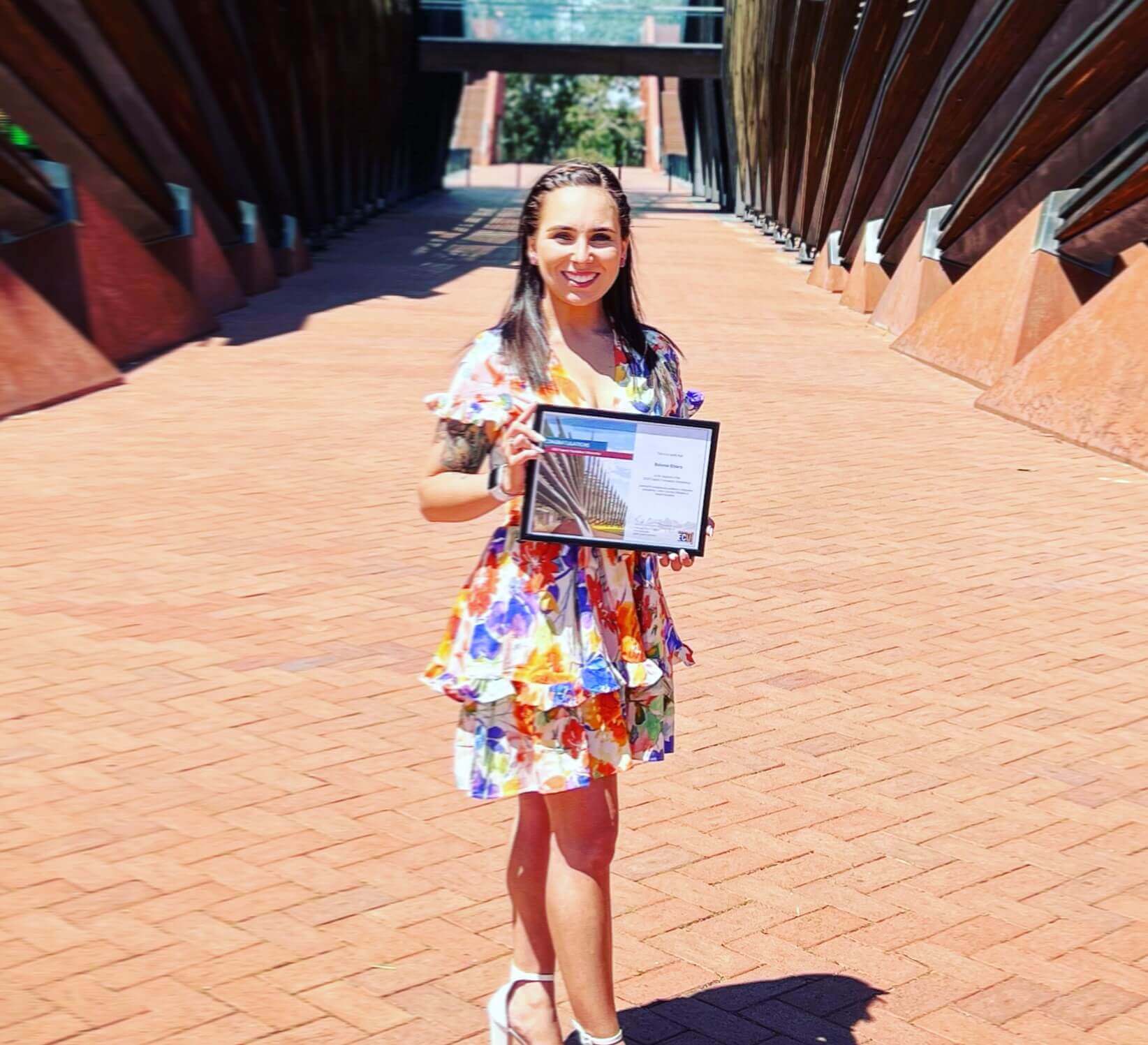
Rebekah has been working with our friends at Ochre, creating high-quality lessons for Australian teachers. As an alumnus of both the Masterclass Series and the Instructional Lead Fellowship, we wanted to hear all about her recent contributions to education in Australia.

What made you decide to join the Ochre community and create lessons for teachers all over Australia?

I believe strongly in the importance of equity in education and am passionate about all students having access to quality education. This was why I decided to join the Ochre community and create lessons for teachers all over Australia. As an early teacher, I really struggled with the pressure of designing lessons and would often spend most of my planning time trying to source quality resources. The concept of Ochre, providing a bank of high-quality curriculum aligned resources available for free, appealed to me and I was keen to be involved in the process.

I initially had some hesitation to be involved, the time commitment was large (especially during holidays), technologies were new to me and having to film each lesson was confronting. However, I quickly realised that these were hurdles easily managed with the support of the team at Ochre. The feeling of achievement as each lesson and video was completed was greater than any challenges faced.  I am so grateful to have had the opportunity to work with Ochre Education.

What skills, strategies and/or knowledge did the Teach Well Masterclass Series give you to support your lesson creation for Ochre?

The Teach Well Masterclass offered great support and preparation for lesson creation at Ochre. The Masterclass equipped me with skills in lesson design, and knowledge about the science of learning especially cognitive load theory and how to incorporate my knowledge of how students learn into the lesson design.

You have recently attended our Instructional Lead Fellowship workshops, what is something you are excited about bringing back to your school?

Teach Well’s Instructional Lead Fellowship has been greatly beneficial to my learning. I’m excited to bring back knowledge of the impact coaching cycle and incorporating this into our school coaching cycle. I would absolutely recommend the instructional lead fellowship for anyone in a coaching or leadership position at their school.

– Rebekah Winning, Primary Teacher & English Coach

The Role of Knowledge, Retrieval Practice & When Students Get Busy Tricking

This week we had our second alumni seminar for the year: “Promoting self-regulation and independence through high-impact instruction”. We looked at key high-impact instructional strategies that promote self-regulated learning and increase student independence. It’s so great to see so many alumni from our first cohorts in 2019 staying in touch too – it’s hard to believe this is Teach Well’s fifth year!

Three resources for our alumni

How knowledge helps: it speeds and strengthens reading comprehension, learning – and thinking

How does knowledge help learning? In this article Cognitive Scientist, Daniel Willingham, takes us through the research on why knowledge is essential for learning. Willingham steps us through how knowledge improves thinking by freeing up space in our working memory, with specific links to how this can support problem solving in Maths and Science. We love implications from cognitive science that inform classroom teaching practice…

What should you do when your students can’t retrieve anything?

We know that retrieval practice and its related ‘desirable difficulty’ is vital for long-term learning, but what do you do when students’ minds go blank during an in-class retrieval practice activity? In this short read, Pooja Agarwal (PhD and cognitive scientist) steps us through four simple techniques to support students during retrieval practice. As a bonus, Pooja also includes what to do when some students retrieve more quickly than others.

Busy tricking during the Do Now

‘Busy tricking’, the clever term coined by Adam Boxer, science teacher and author, is what students do when they give the outward impression that they are engaging with work but are in fact doing things that avoid thinking. What can you do when your students spend all the allocated time in a short ‘Do Now’ task or the ‘Apply’ section of a Daily Review? Read this article for some simple yet effective solutions to ‘Busy tricking’.

High-Impact Teaching Strategies for Academic Excellence

We would like to take this opportunity to congratulate Laura Glisson, our Language and Literacy Specialist here at Teach Well, for gaining a position on the Publication Committee at Learning Difficulties Australia, an association dedicated to assisting students with learning difficulties through effective teaching practices. Nice work, Laura!

Three resources for our alumni

How to use retrieval practice for group work: the surprising truth


Can teamwork actually help students retain more information than independent work? What does the research say about the effect of group work in students’ learning? This article looks at the research behind group work and how teachers can use it to improve student learning.

Improving multiple choice questioning


How can we more efficiently and effectively use multiple choice questioning as a learning technique? In this article, you can read about how this form of questioning can help students be more metacognitive about their learning – could they accurately retrieve the correct answer or can they just recognise it from a list of options?

New AERO resources released


Have you seen the new Australian Education Research Organisation’s practice resources? New resources include research summaries, facilitated guides for different learning areas, videos and case studies. These could be perfect for collaborative discussions at school.